
News
EELA Kenya Strengthens Coordination and Advances Implementation at the 5th Project Steering Committee Meeting
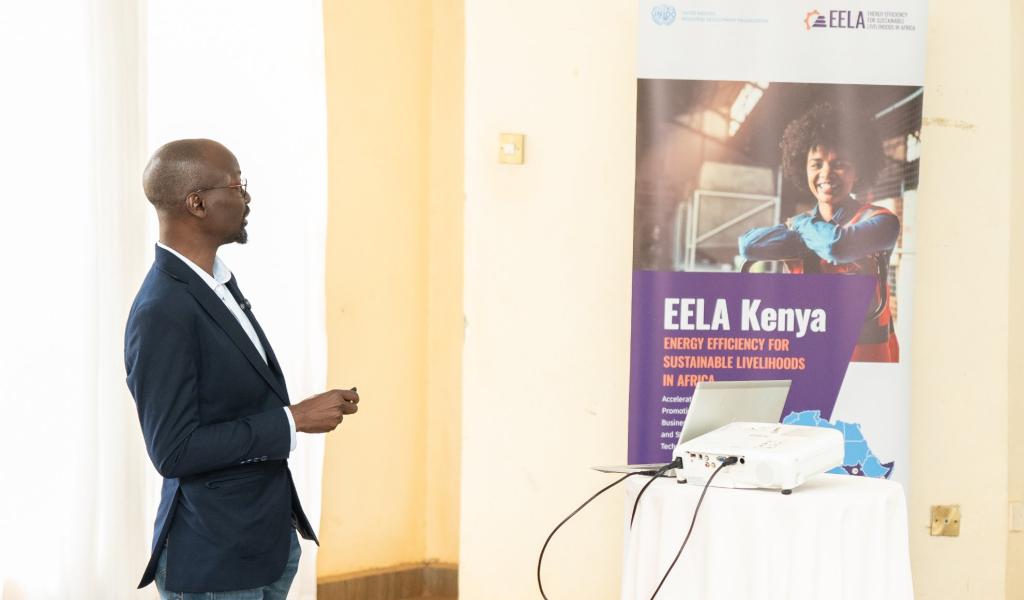
Nairobi, Kenya, 26 May 2026 - The EELA Kenya Project Steering Committee (PSC), co-chaired by the Ministry of Energy and the Ministry of Investments, Trade and Industry, convened on 26 May 2026 in Embu to strengthen coordination and align on implementation priorities under the EELA Kenya Country Window Project. The meeting brought together key partners and institutions, including EACREEE, KAM, TVET institutions, KIRDI and private sector representatives, reflecting the project's multi-stakeholder approach.
Participants reviewed recent progress achieved, including the commissioning of key studies on industrial energy use, energy-efficient appliances, and the development of an energy service company (ESCO) market. Ongoing activities to strengthen technical capacity and market readiness were also highlighted, encompassing EnMS trainings, field assessments in the tea sector, and the deployment of technical expertise in collaboration with industry partners.
The PSC also provided a platform to align on forthcoming priorities, including the finalisation of baseline studies, the scaling up of capacity-building activities, and the continued development of the ICTP platform to connect market actors and facilitate the uptake of energy-efficient solutions.
As part of the meeting, PSC members also joined the introductory session of the second EnMS User Training, which brought together participants from tea and dairy factories. The training aims to strengthen capacities in energy management practices, enabling industries to identify opportunities for improving energy performance and implementing energy efficiency measures.
Across all sessions, the discussions underscored a shared commitment to translating the project's technical groundwork into measurable results, with financial institutions and private sector engagement identified as the next critical lever for accelerating impact at scale.