
News
EELA Hosts Information Session in Kenya’s Tea Capital to Advance Energy Efficiency Practices
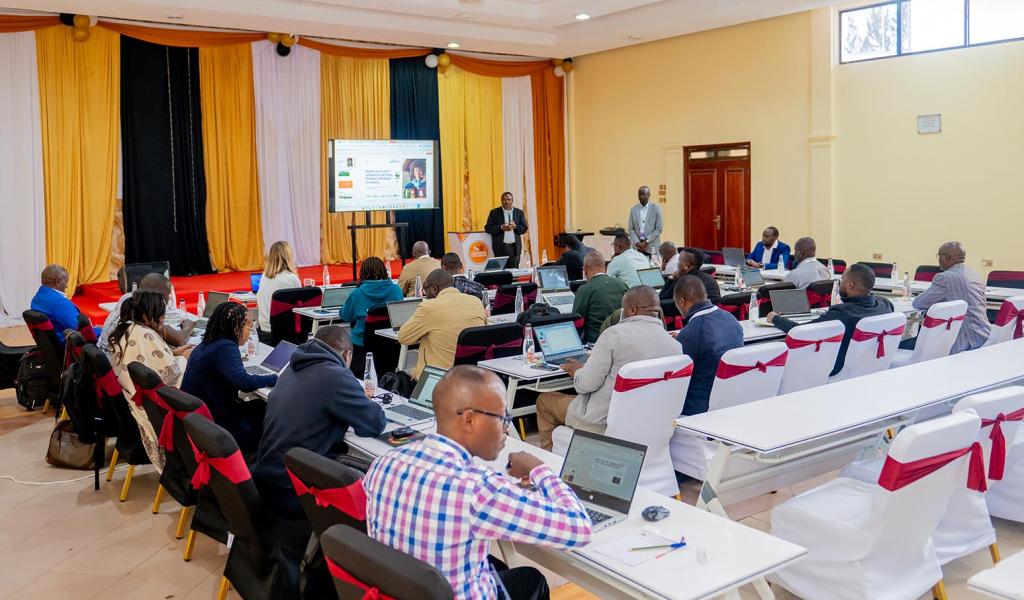
EELA Kenya conducted an information and update session in Kericho, Kenya’s “Tea Capital.” The choice of Kericho was strategic: it is home to some of the country’s oldest tea plantations and factories, and commercial tea cultivation began here in 1924. With 148 tea factories nationwide and tea processing accounting for nearly 80% of energy consumption through firewood, the sector represents a major opportunity for energy efficiency and low-carbon innovation. The session aimed to share research findings, engage stakeholders, and strengthen collaboration around the Industrial Clean-Tech Platform (ICTP) pilot in the tea industry.
The event was organized by UNIDO with strong support from the Tea Board of Kenya (TBK), the State Department of Industry (SDI), and the Project Steering Committee (PSC). TBK opened the session with remarks reaffirming its commitment to data sharing and collaboration, highlighting the potential impact of energy efficiency interventions in Kenya’s tea sector. SDI emphasized that the initiative aligns with national priorities for competitiveness and efficiency, while PSC Co-Chair Eng. Isaac Kiva underscored the government’s renewed focus on implementing the updated national energy policy, revising the energy efficiency strategy, and developing the Integrated National Energy Management Plan.
WWF HIGHLIGHTS FIREWOOD DEPENDENCY AND ENVIRONMENTAL RISKS
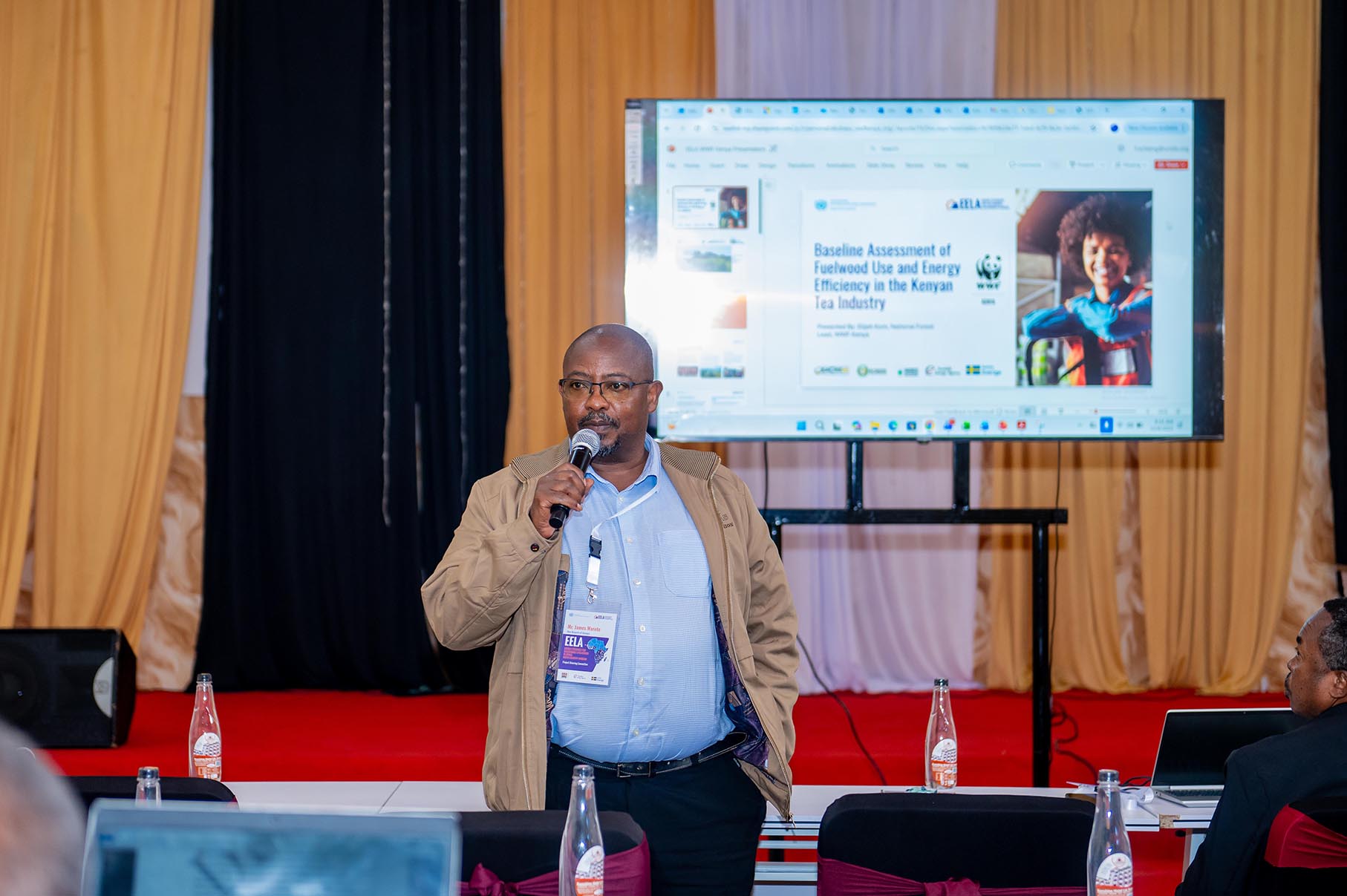
A key segment of the session featured WWF Kenya, working in partnership with the Tea Research Institute (KALRO), presenting a baseline assessment on wood and fuel consumption in Kenya’s tea industry. The study addresses the lack of comprehensive data on firewood use across tea factories, which currently accounts for approximately 80% of energy needs in tea processing. WWF outlined the environmental and social risks linked to mismanaged firewood sourcing, including deforestation, greenhouse gas emissions, and biodiversity loss. The research focuses on quantifying firewood consumption, assessing community impacts, and evaluating alternative energy options for technical and economic feasibility. WWF emphasized that reducing firewood dependency could lower production costs, mitigate environmental risks, and position Kenyan tea for premium pricing in global markets. Stakeholders were encouraged to share data and support piloting of low-carbon technologies to ensure long-term sustainability.
CHEMONICS EGYPT EXPLORES ENERGY-EFFICIENT MOTORS ACROSS 15 COUNTRIES
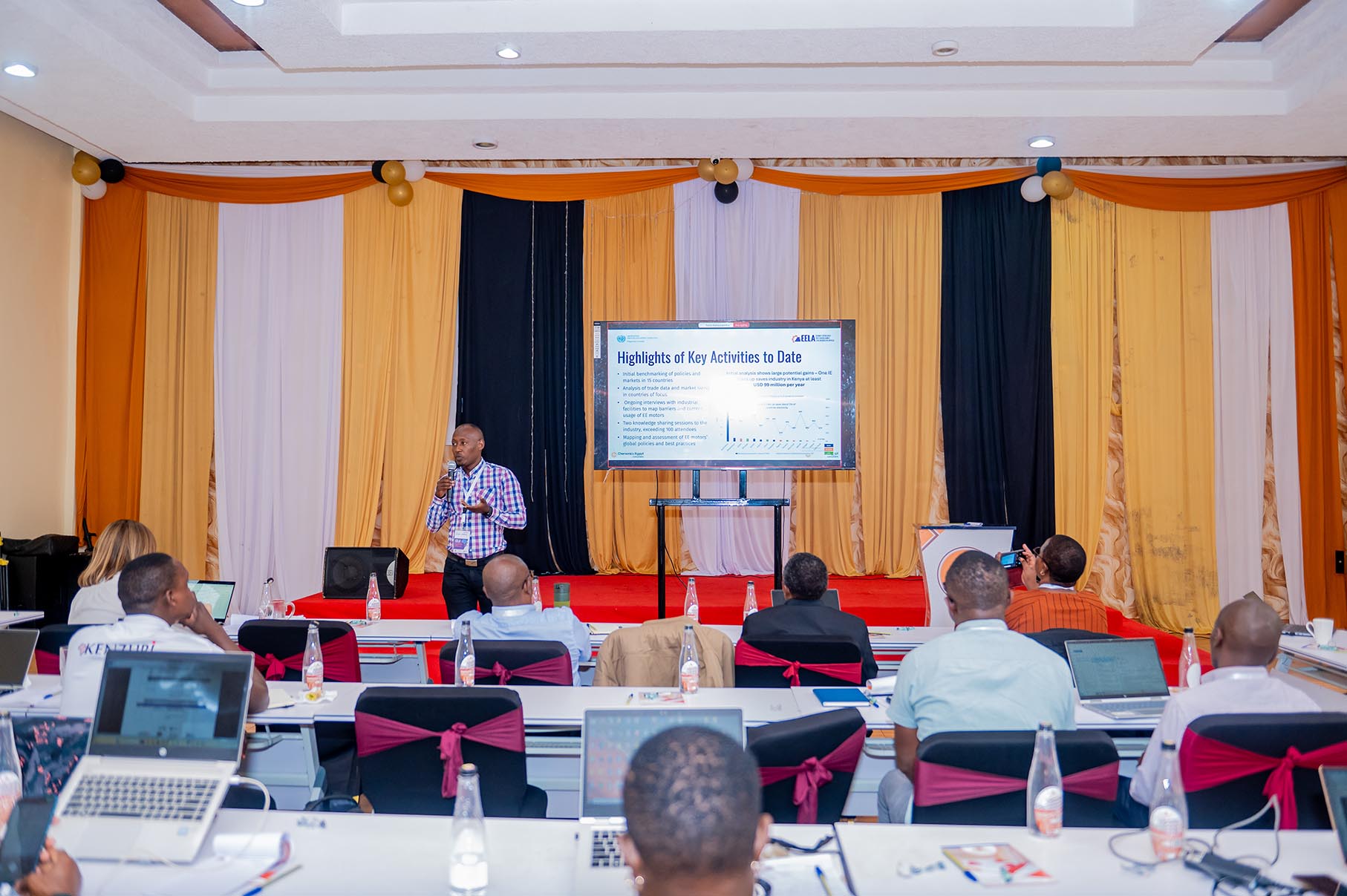
The session also featured insights from Dr. Evan Murimi, Sustainable Energy Consultant at Chemonics Egypt, which is conducting a market assessment of industrial motors across 15 countries in East and Southern Africa, the ESC region, and ECOWAS. The study aims to understand current practices, barriers to adopting energy-efficient motors, and develop policy recommendations, including Minimum Energy Performance Standards (MEPS). Preliminary findings show Kenya imports about $5 million worth of motors annually, with approximately 10,000 units entering the market each year. Transitioning from IE1 to IE2 motors could save industries up to $99 million annually, making energy efficiency financially attractive given Kenya’s high electricity costs. The study also maps regulatory readiness, financing mechanisms, and institutional capacity, noting that Kenya has strong conditions for implementing MEPS thanks to its regulatory framework and industrial demand. Chemonics is engaging stakeholders through questionnaires, interviews, and readiness workshops, and is developing tools such as an energy savings calculator to motivate industries toward adopting efficient technologies.