
Insights & Opinions
Beyond the Label: Why Zambia’s Industrial Future Depends on Energy Efficiency
For decades, the conversation around energy in Zambia has been dominated by a single, pressing question: How do we generate more power? Instintively, we look to our dams, our solar potential, and our coal reserves. But a recent market study conducted by Research Methods International, under the Energy Efficiency for Sustainable Livelihoods (EELA) Zambia Project, funded by The Swedish International Development Cooperation Agency (Sida), and subsequent validation workshop of the findings held in Lusaka on April 29, 2026, has shifted the lens toward a more sophisticated, and arguably more urgent, question: How do we stop wasting the power we already have?
The answer is both simple and transformative. Energy efficienc is no longer a secondary policy goal or a “green” add-on. It is a strategic pillar for Zambia’s energy security, industrial competitiveness, and climate resilience. Yet the opportunity goes even further. This is not just about using energy better; it is about reshaping Zambia’s industrial future - transforming Zambia from a passive consumer of imported technology into a regional hub for energy-efficient manufacturing.
THE “INVISIBLE POWER PLANT” ZAMBIA HAS YET TO FULLY USE
Energy efficiency is often framed as a demand-side intervention, that is to say a way to encourage consumers to use less. In Zambia, this framing is too narrow. In reality, energy efficiency functions as a supply-side solution in disguise, an “invisible power plant” that reduces pressure on generation without requiring new infrastructure. Every high-efficiency appliance installed - whether a refrigerator, motor, or cooling system - reduces demand on an already constrained grid. Each avoided kilowatt is energy that does not need to be generated, transmitted, or subsidized. In a capital-constrained environment, where expanding generation capacity is both costly and time-intensive, efficiency represents the fastest and most cost-effective capacity Zambia can deploy.
THE PARADOX OF THE PERVASIVE LABEL
The market study reveals a fascinating paradox. Approximately 92% of appliances currently sold in Zambian shops carry energy labels. At first glance, this suggests a market already transitioning toward efficiency. In reality, it reflects what can only be described as ‘phantom progress’. In the absence of mandatory Minimum Energy Performance Standards (MEPS) and accredited local testing infrastructure, these labels are often based on unverified manufacturer claims. Standards exist, but they are not enforced. Labels exist, but trust is not guaranteed. The result is a distorted market where efficient and inefficient products compete side by side, indistinguishable to the consumer but vastly different in performance, draining the national grid and the consumer’s wallet. Without clear regulatory boundaries, Zambia risks becoming a ‘dumping ground’ for inefficient appliances increasingly excluded from more tightly regulated global markets.
MANUFACTURING: FROM ASSEMBLY TO AUTONOMY
According to the study, Zambia’s appliance market today is dominated by retailers (52%) and importers (26%), with local manufacturing accounting for just 17%, and largely limited to basic assembly. We import the “brains” and “heart” of our appliances - compressors, motors, and electronic systems - leaving limited space for domestic value addition.
But this is precisely where the opportunity lies. The introduction and enforcement of SADC-aligned MEPS would do more than regulate product quality. It would send a clear and consistent signal to the market: the era of “cheap and wasteful” is over. That signal creates the regulatory certainty investors need. Without it, there is little incentive to move beyond assembly. With it, the market begins to reward quality, and local manufacturing becomes viable, not just aspirational.
The Entrepreneurial Impact: Consider a local SME assembling solar-powered irrigation pumps. Without standards, they are undercut by cheap, inefficient imports that fail after one season. With enforced MEPS, the market rewards their quality, allowing them to scale, hire more technicians, and move from simple assembly to manufacturing specialized components right here in Zambia. This is not only about better appliances: it is about improving productivity, lowering operating costs, and strengthening the competitiveness of Zambian industry. Zambia has the potential to move up the value chain, particularly in productive-use appliances linked to agriculture and small-scale industry. This is where energy efficiency and industrial policy intersect. A stronger efficiency framework can catalyze a shift from importing finished goods to producing components, building skills, and anchoring new industries locally.
THE PRICE TAG BARRIER OR THE FINANCING GAP?
The study confirms what many already know: affordability is a central constraint. Around 55% of consumers make purchasing decisions based primarily on upfront costs, in a market where 86% of transactions are cash-based. At face value, this suggests that energy-efficient appliances are out of reach for most households.
But this interpretation misses a critical insight. The challenge is not a lack of demand for efficiency, but it is a lack of financing to access it. Consumers understand value. What they often lack is the ability to absorb higher upfront costs, even when long-term savings are clear. This is a financing problem, not a behavioral one.
Unlocking this demand will require financial innovation. Zambia’s experience with pay-as-you-go (PAYGO) solar models has already demonstrated what is possible. Similar approaches, combined with targeted fiscal incentives and blended finance mechanisms, can enable consumers to pay for efficiency over time rather than upfront. If done right, this could transform energy-efficient appliances from a premium choice into the default option.
BRIDGING THE GENDER AND INSTITUTIONAL GAPS
Two additional findings point to structural gaps that must be addressed. First, gender inclusion. Female-led firms account for just 1% of the market. This is not simply a social imbalance - it is an economic constraint. A modern energy economy cannot be built while excluding half of its potential workforce and entrepreneurial base. Expanding access to skills, finance, and market opportunities for women is essential to unlocking the full potential of the sector.
Second, institutional coordination. Zambia’s energy efficiency landscape spans multiple agencies - the Ministry of Energy, the Energy Regulation Board, the Zambia Bureau of Standards, and the Zambia Compulsory Standards Agency. Each has a clear mandate, yet coordination remains limited. This is not a capacity problem, but a coordination problem. Fragmentation weakens enforcement, slows implementation, and creates uncertainty for the private sector. Establishing a formal inter-agency coordination mechanism is therefore a prerequisite for market transformation.
THE COST OF DELAY
There is a narrowing window for action. Every inefficient appliance sold today represents years of unnecessary energy consumption and higher costs for households and businesses. Appliances are long-lived assets. Delaying standards today locks in inefficiency for the next decade. At the same time, global markets are moving ahead. As other countries tighten efficiency regulations, lower-quality products are redirected to markets with weaker controls. Without decisive action, Zambia risks becoming a repository for outdated, energy-intensive technologies. The cost of inaction is not static - it compounds overtime.
FROM CONSENSUS TO ACTION
The validation workshop confirmed that consensus already exists. Zambia has a solid policy foundation, an active market base, and a clear set of priority interventions. What is required now is execution. The pathway forward is both practical and phased:
- In the short term, gazetting MEPS and launching mandatory labelling and awareness efforts
- In the medium term, establishing testing infrastructure, enforcement systems, and financing mechanisms
- In the long term, scaling local manufacturing and strengthening environmental management systems
The shift required is no longer conceptual, it is operational.
BEYOND EFFICIENCY: A NEW INDUSTRIAL DIRECTION
Energy efficiency is often framed as a constraint, a way to reduce consumption. In reality, it is an enabler. It enables a more stable energy system. It enables lower costs for consumers. And critically, it enables a new industrial pathway, one built on quality, competitiveness, and value addition.
Zambia does not need to build an energy efficiency market from scratch. That already exists. What is required now is to shape it. The opportunity is no longer theoretical. The signals are clear, the policy direction is established, and the private sector is watching and waiting. What happens next will determine whether Zambia becomes a destination for inefficient imports or a regional leader in efficient, high-value manufacturing. By embracing energy efficiency, we aren't just saving kilowatts; we are building an industrial future where "Made in Zambia" stands for quality, sustainability, and the highest standards of efficiency.
Doreen C. Bwalya
National Porject Coordinator, EELA Zambia, UNIDO
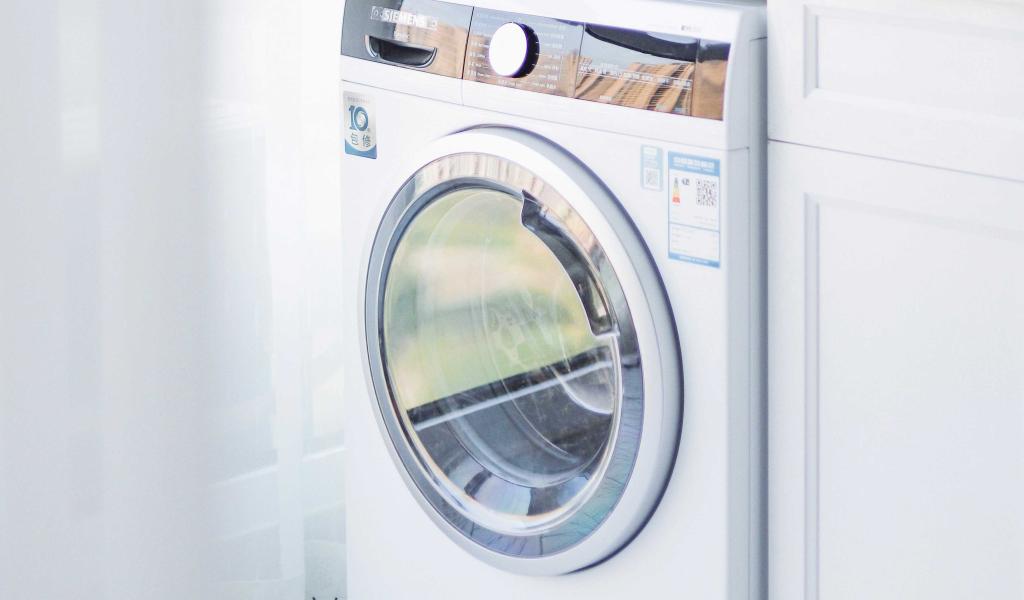
photoo | Raychan via Unsplash